As part of French High Schools Around the World Week, themed “Fostering Creativity and Critical Thinking in the Age of AI,” a half-day session was dedicated to artificial intelligence (AI) to help preschool, elementary, and middle school students understand this technology.
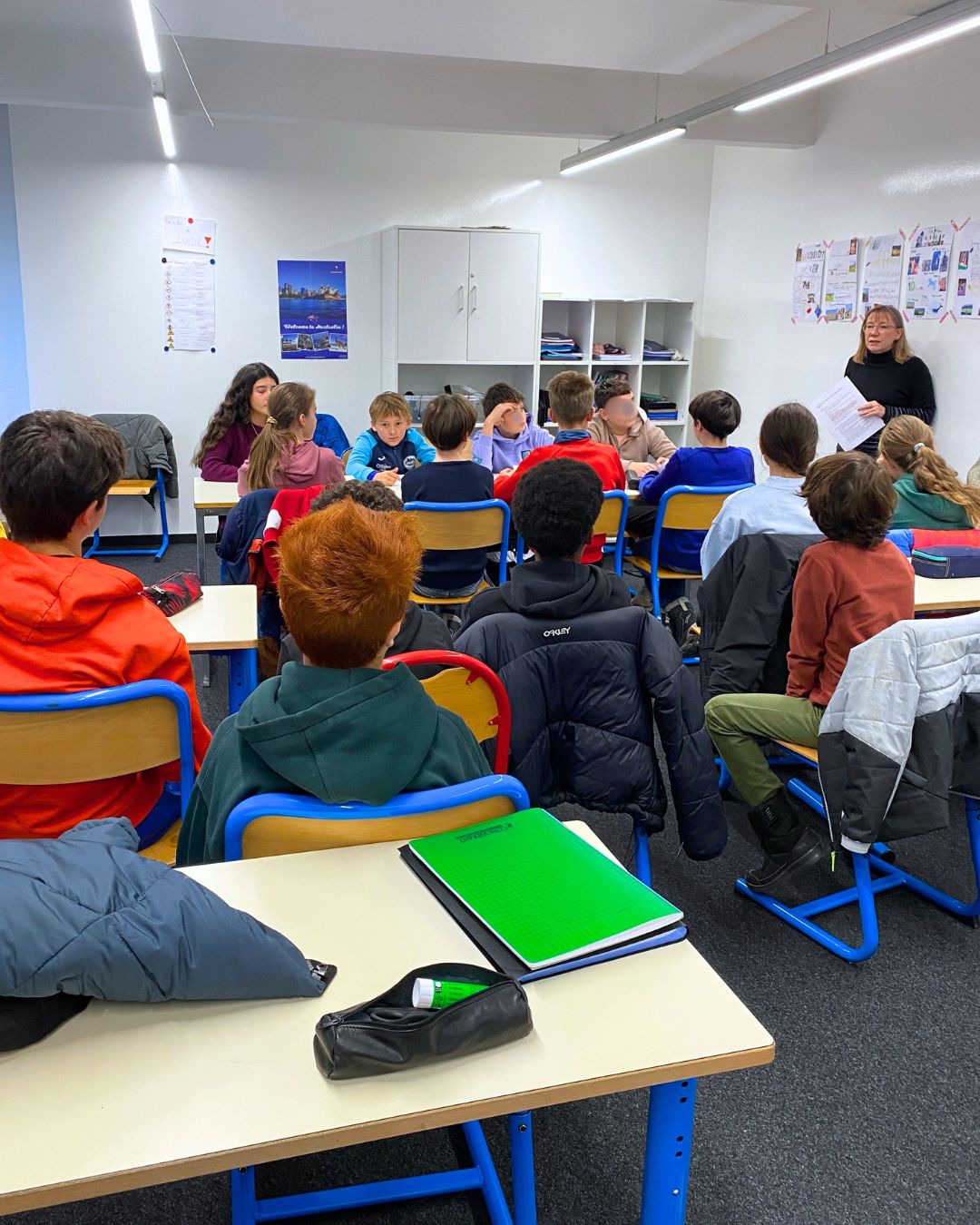
Teaching AI: Guidelines, Discussions, and Supervised Activities in Middle School
As part of LFM Week, a half-day was dedicated to AI to help middle school students understand, discuss, and use artificial intelligence responsibly.
A preliminary survey helped identify their current uses of AI, their questions, and their initial perspectives on this technology. The middle school teachers then organized a structured debate centered on three positions: For, Against, or Neither For Nor Against.
Each group gathered its arguments, appointed spokespersons, and participated in an open discussion followed by a class discussion.
The goal of these discussions is to encourage critical thinking, public speaking, and active listening.
This initial phase was then followed by a theoretical presentation to round out the discussion and provide a structured overview of:
• what AI really is,
• how it works,
• its practical applications,
• as well as its ethical, social, and environmental challenges, including the growing risk of dependence on AI tools.
These initial steps lay the necessary groundwork for students to reflect on the uses of AI in an informed manner. They will then be applied in class, in a structured way, to deepen their knowledge, strengthen their critical perspective, and experiment with AI across various disciplines.
The goal: to guide students toward a thoughtful, responsible, and well-reasoned use of the technology, both at school and in their daily lives.
Each group gathered its arguments, appointed spokespersons, and participated in an open discussion followed by a Q&A session.
AI in Elementary School: Understanding, Imagining, and Comparing to Develop Critical Thinking Skills
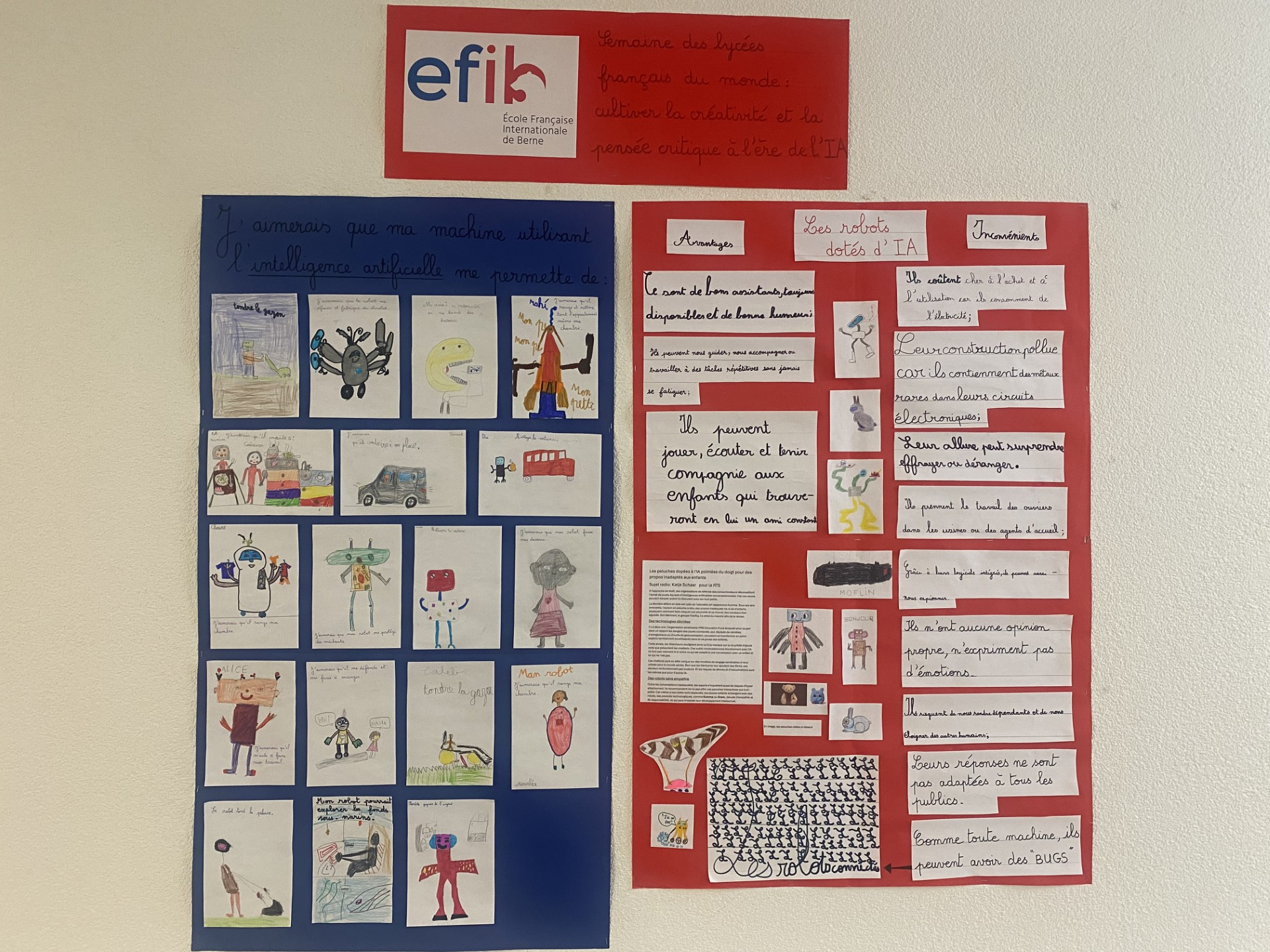
In elementary school, after learning about what AI is (how it works and what it’s used for), students were able to reflect on and summarize its potential and risks in the form of tables.
In first grade, students brainstormed ways they could use an AI-powered machine: mowing the lawn, making chocolate, reading a story, doing homework, or even tidying their rooms… They had no shortage of ideas for making their daily lives easier!
Third-grade students explored the pros and cons of AI-powered robots. By raising arguments similar to those put forward by the middle school students, they highlighted the potential of AI—including its ability to perform tasks without stopping—while also pointing out the high cost of producing the electronic components for these robots and the risks of invasive AI that could monitor us.
To address the risks inherent in AI in a practical way, the students then examined an article by Katja Schaer for RTS that mentioned the recent Kumma stuffed animal scandal. Indeed, these connected toys are currently under fire on three fronts: for language unsuitable for children, for the surveillance risks posed by these connected devices, and finally for experts’ concerns regarding the risk of children becoming overly attached to these toys, which could impact their intellectual development.
By exploring this technology in depth—using numerous examples from their daily lives—elementary school students were able to better understand what AI is, how it works, and its potential, as well as its current and future challenges in terms of education, society, and sustainability.
Understanding AI in Preschool: Creating, Comparing, and Reflecting
In the middle and upper kindergarten classes, the students were introduced to artificial intelligence through a simple yet meaningful activity: creating a land art photograph in the forest. Their teacher then asked the AI to produce a “reproduced” version of it.
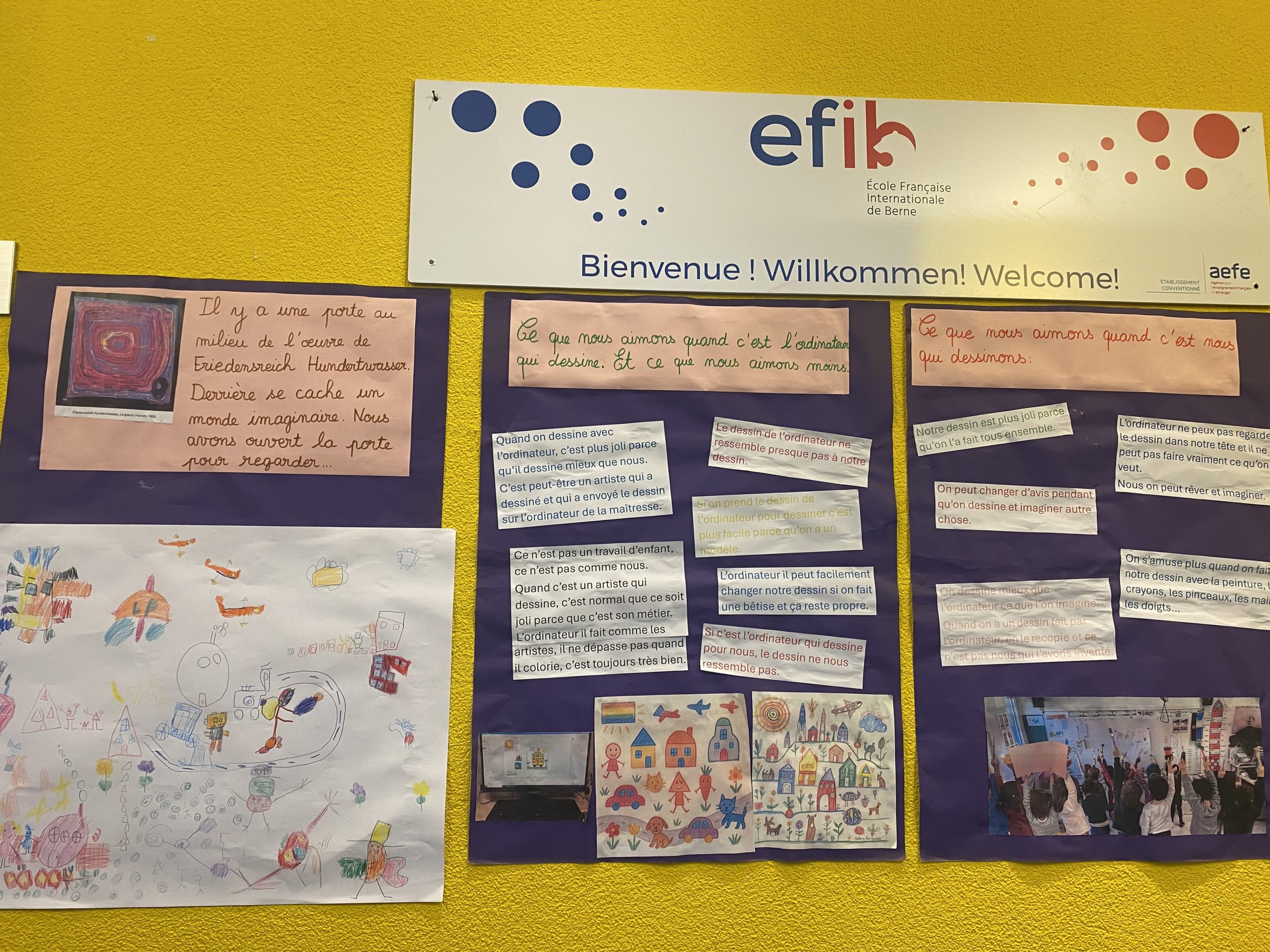
Similarly, the students in the lower kindergarten class created a collaborative drawing on the theme of the city. Their teacher then asked the AI to reproduce that drawing.
In both cases, the students observed that AI (ChatGPT and Canva) doesn’t always get it right or fail to reproduce children’s drawings, doesn’t place elements exactly where they should be, or fails to create what’s asked of it (a rectangular rainbow sun), and takes time—whereas they manipulate, compare, and show tremendous creativity!
This comparison sparked a group discussion: What is AI used for? What can it do—and what can’t it do? The students’ conclusion: AI can help with imagination and visualization, but it cannot replace the physical act, the sensory experience, or working together.
Weekly recap for preschoolers? A hands-on and fun introduction to fostering curiosity, language skills, and critical thinking.
To view a map of participating schools in the AEFE, SECO zone: https://aefe.maps.arcgis.com/apps/instant/sidebar/index.html?appid=a259cf0289dd4b2295a71c556b30a069